Search Destinations

Search results 21-30 of 85

Port Sorell
Port Sorell

Port Sorell

Category:

Tasmania

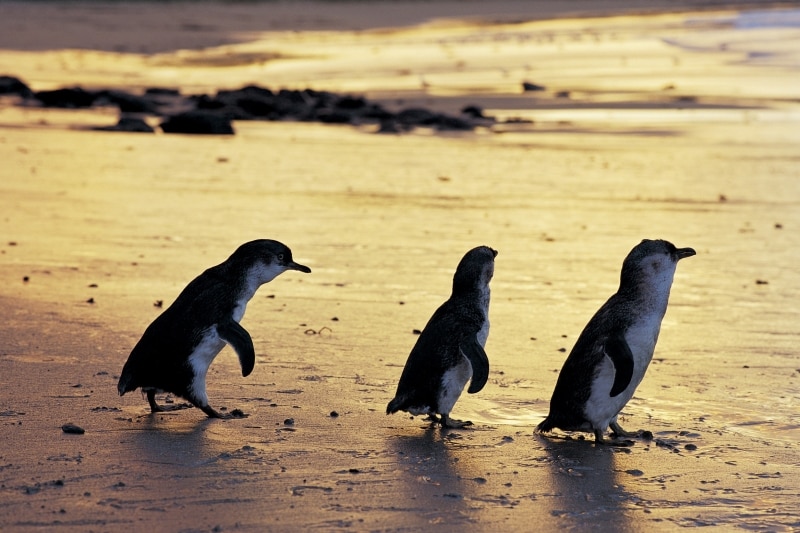
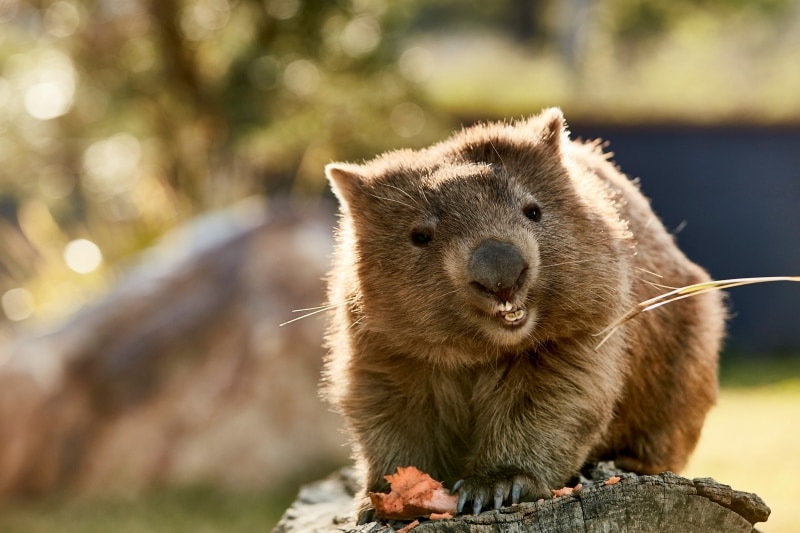
The seaside town of Port Sorell, on the Rubicon River estuary, is a quiet getaway, close to some of the best natural wildlife viewing opportunities in the state. Port Sorell has a population of 1,950, which increases significantly in the summer months when holidaymakers flock to camping grounds and shacks. Its boat ramp is the busiest on the north-west coast. Water sports include water skiing and sea kayaking, but if you prefer to keep dry, you can relax on the sandy dunes, fish from the floating pontoon, play a round of golf and one of the two local courses, or walk along the picturesque foreshore. Nearby are Shearwater, Hawley Beach and Freers Beach. At low tide it is possible to walk to Penguin Island and Rabbit Island – the latter a hideout for bushrangers in the mid-1800s. Just across the Rubicon are Narawntapu National Park, abounding in Forester kangaroos, wallabies, wombats, and even Tasmanian devils. At dusk, you can catch sight of little penguins scampering up the beach at Point Sorell. Port Sorell was established in 1822 by Lieutenant-Governor William Sorell and was once the largest town on Tasmania’s north coast. The port traded in wattle bark, and thrived until it was outgrown by Devonport. Port Sorell even had a convict gaol on Watch House Hill, which was later replaced by a bowling green. Little evidence of Port Sorell’s history remains, after the town was destroyed by bushfire. Climate is temperate at Port Sorell, reaching an average maximum of 21 degrees Celsius (70 degrees Fahrenheit) in January and 13 degrees Celsius (55.5 degrees Fahrenheit) in June. Port Sorell is 117 kilometres (72.5 miles) north of Launceston and a 20 minute drive east of Devonport.
North - North East - Albert Hall, Launceston

North - North East

Category:

Tasmania

Tasmania's north-northeast is known for its fertile land and quality timber. Crops such as poppies and hops grow here, and grazing land for sheep is plentiful. A former mining area, relics of that era can still be found in north-eastern towns. Launceston is the largest city in the region. From Launceston, the island’s second major city, this area covers dark green forests, ancient mountain peaks, fields of summer lavender, vineyards, tiny villages, national parks and walking tracks along unspoiled beaches as far as you can see.

Port Arthur
Port Arthur

Port Arthur

Category:

Tasmania

The village of Port Arthur is often missed because of the significance of the Historic Site, but there is so much to experience in the area that you may want to consider staying overnight, particularly as entry passes to the Site are valid for two days. Surfing, sea kayaking and bushwalking are popular and the coastline is spectacular. A short drive south of Port Arthur is Remarkable Cave, so called because its opening is said to resemble a map of Tasmania. From here you can walk to Crescent Bay, a secluded curve of striking beauty backed by huge sand dunes. Just 20 kilometres (12.5 miles) north-west is the Coal Mines Historic Site, where interpretive signs explain the harsh lives and working conditions of repeat offenders from Port Arthur who worked underground extracting coal. Look out for DooTown, a quirky shack community devoted to homes with a theme: “GunnaDo”, “She’ll Doo”, "Humpty Doo” – and many more. The settlement began life in 1830 as a timber station. In the years that followed, convicts created a small town for 1,100 inmates at its peak in the early 1840s Port Arthur’s maximum average daily temperature is 18.5 degrees Celsius (65.5 degrees Fahrenheit) in January and 11.5 degrees (52 degrees Fahrenheit) in June. It is 93 kilometres (58 miles) south-east of Hobart on the A9.

Tasman Peninsula and The South East - Tasman Lighthouse

Tasman Peninsula and The South East

Category:

Tasmania

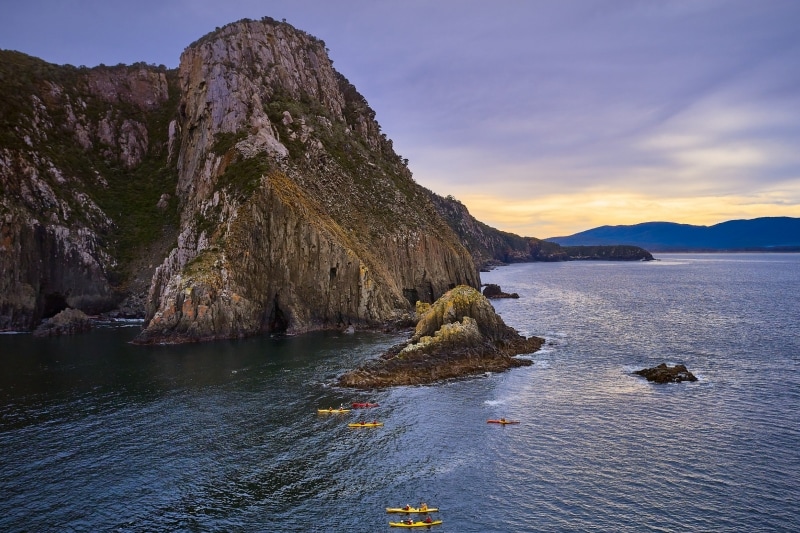
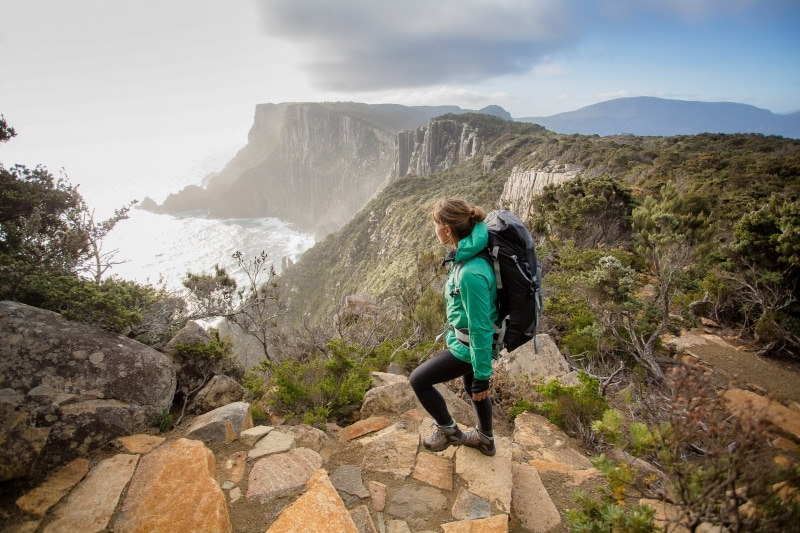
The Tasman Peninsula is a land of farms, forests, sheer dolerite cliffs, sweeping views across the Tasman Sea and the place of the world’s southern-most historic prison. It is almost an island apart. As you travel past Hobart International Airport look out for Barilla Bay, where you can sit in the sun overlooking the oysters beds that produce the succulent oysters they serve up on the half shell. Turn right at the historic town of Sorell (look out for the signs to the Sorell Fruit Farm) and begin your journey into a land of scenery, wildlife, heritage and adventure. At Copping you will find small vineyards and cafes selling local specialities - octopus, oysters, quail and venison. Just near Dunalley is Potters Croft craft shop where you will find the works of some of Tasmania‘s best crafts people. Nearby is the Dunalley Waterfront Cafe and Antiques, and the Dunalley Fish Market. As you head down the long hill into Eaglehawk Neck, a narrow isthmus, you are entering an area once guarded by a line of half-starved hounds waiting to attack any convict trying to escape. The area offers you a number of choices: take some short or multi-day walks in the Tasman National Park, with its sweeping beaches and forest walks beside 300 metre sea cliffs, or head to Port Arthur Historic Site. At Port Arthur Historic Site you step back 150 years as you explore a prison once feared and reviled. Today, that is hard to imagine as you stroll beneath graceful old oak and elm trees, through 19th century-style gardens and cruise the bay to Point Puer, the boys’ prison, and the Isle of the Dead. The township of Port Arthur overlooks the water and is a good place to stay when exploring the area. Returning north, turn off to visit the Wielangta Forest, where rare parrots flash through the blue gums. Beyond the trees is the gentle landscape of the east coast.

Bicheno
Bicheno

Bicheno

Category:

Tasmania

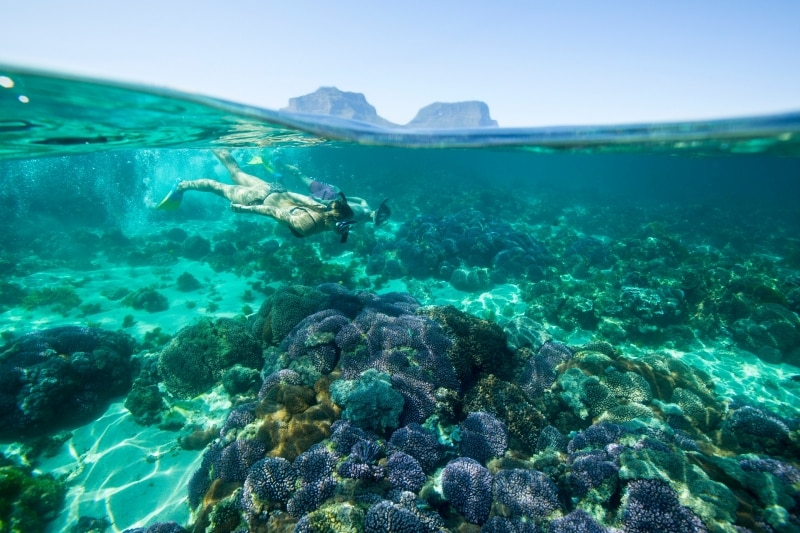
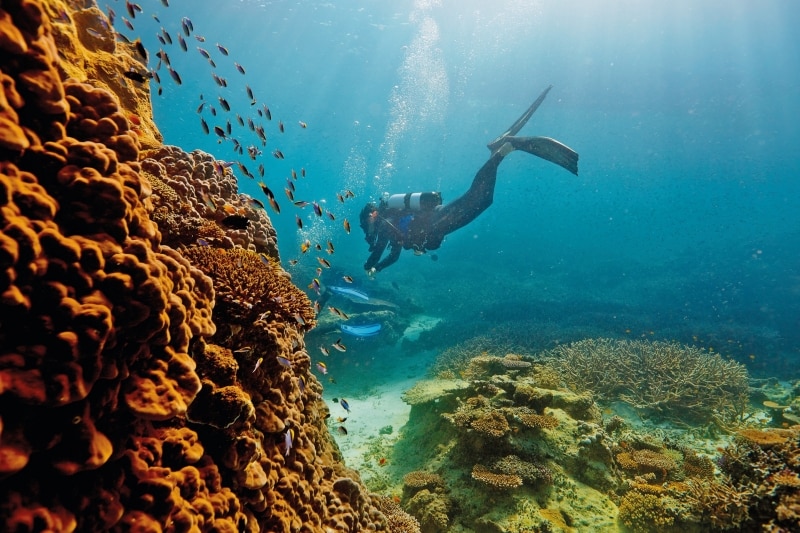
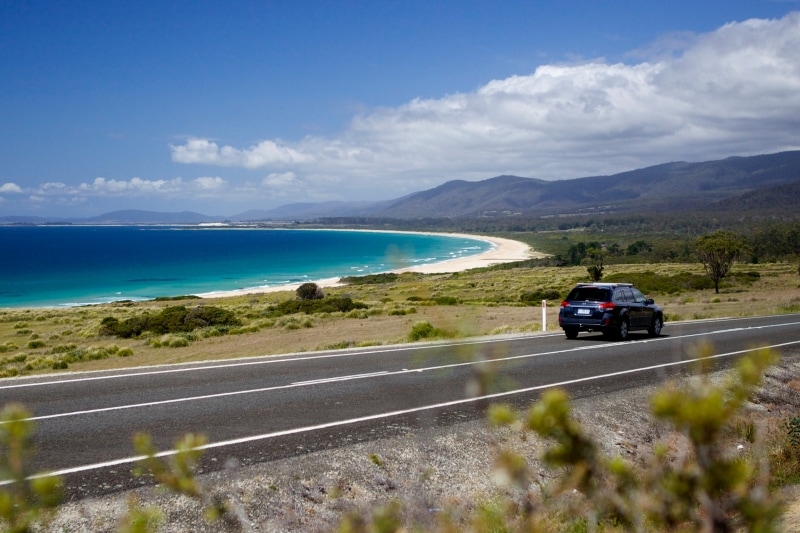
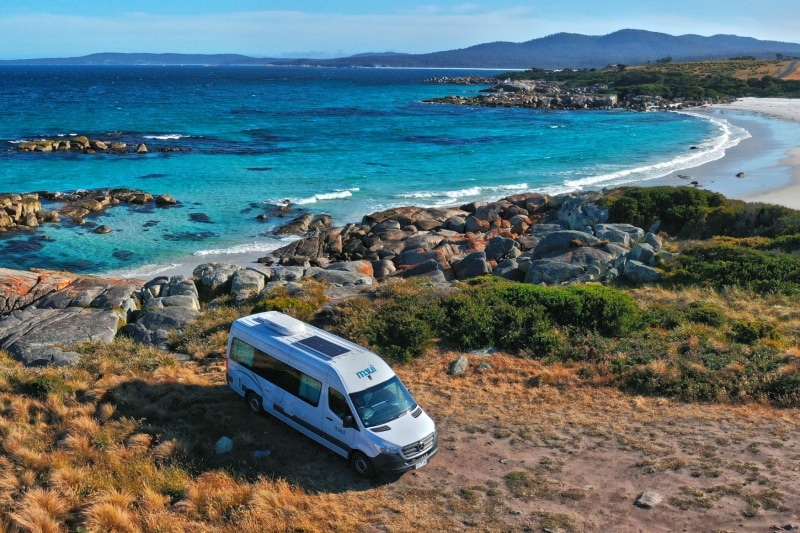
Bicheno, just north of the Freycinet Peninsula on Tasmania’s stunning east coast, is known for its laid-back lifestyle and outdoor activities. If a holiday relaxing by white, sandy beaches, dining on fresh seafood and playing leisurely games of golf sounds appealing, you’ll love Bicheno. More than 700 people live in the town, and water’s its lifeblood. Crayfish, abalone and Australian salmon are often brought ashore with the daily fishing catch. You can explore the coast at your own pace in a sea kayak, or pick up some local knowledge on a guided boat trip. Marine life and sea birds abound in Governors Island Marine Reserve – stay dry in a glass-bottomed boat or scuba dive amid sheer rock walls, deep fissures, caves, sponges and sea whips. Tasmania is considered one of the best temperate water dive sites in the world. There is plenty to do on dry land as well. Motor tricycle tours, a Grape Escape wine tour, and walks to Rocking Rock and the blowhole or along the sandbar to Diamond Island Nature Reserve are popular. Penguin tours are one of the town’s most popular attractions, while the local wildlife park has a wide array of fauna, including kangaroos, Tasmanian devils and pelicans. Waterfalls tumble to tranquil lakes and river ravines in nearby Douglas–Apsley National Park, while to the south, in Freycinet National Park, you can take the famous walk to Wineglass Bay, one of the best beaches in the world. Formerly known as Waubs Boat Harbour, Bicheno was established as a whaling centre in 1803. The town was named after James Ebenezer Bicheno and expanded in 1854 with the discovery of coal in the Denison River. Bicheno has mild weather, with an average maximum of 21 degrees Celsius (70 degrees Fahrenheit) in January and 14.5 degrees Celsius (48 degrees Fahrenheit) in June. The town is 182 kilometres (113 miles) north east of Hobart via the Tasman Highway.

George Town
George Town

George Town

Category:

Tasmania

George Town sits on the eastern banks of the Tamar River about 40 minutes’s drive (50 kilometres/32 miles) north of Launceston. It is the third oldest settlement in Australia after Sydney and Hobart. At nearby Low Head you can explore one of the best-preserved examples of an early pilot station, built by convicts in 1805. The pilot station is still in operation today. Also, from Low Head you can take a penguin tour to see the world’s smallest penguins clamber to their nests each night. To the east are the vineyards of Pipers River, and the Bridestowe Lavender Farm. Just south of George Town along the shores of the Tamar River is the deep-water port of Bell Bay and as you follow the A8 Highway you can stop by the Lavender Garden at Rowella, and the Hillwood Strawberry Farm. George Town area with a population around 5,600 offers a range of accommodation from hotels and motels to bed and breakfast. George Bass and Matthew Flinders explored the area in 1798 during their circumnavigation of Tasmania, and in 1804 Captain William Paterson set up a small encampment. In 1806, the settlement was abandon for the current Launceston location. Northern Tasmania was governed from Sydney until 1812 when it came under the jurisdiction of Hobart Town. George Town’s weather is similar to Launceston, which is slightly cooler in winter and warmer in summer than Hobart and the east coast. No matter what time of year you visit, bring a warm jacket and all weather gear.

Swansea
Swansea

Swansea

Category:

Tasmania

The historic township of Swansea is ideal for fishing, swimming and diving, or relaxing on the beach overlooking Great Oyster Bay and the beautiful Freycinet National Park. Swansea has a population of 530, housed in colonial buildings, contemporary homes and classic beachside shacks. Self-guided historic walks of Swansea pass Schouten House, Meredith House and Morris’s General Store. You can learn about leather staining at the Swansea Bark Mill and Tavern. Look out for the bizarre profile of Spiky Bridge, just outside town. Swansea’s exquisite fresh harvests – from land and sea – are a part of the east coast experience. Enjoy wine tasting at the Wine and Wool Centre, then sample some of the area’s other local produce – walnuts, oysters, olives and, of course, fish. There are many beaches and bays in and around Swansea, and lookouts over picturesque coastline. Shearwater (mutton bird) colonies are also common in the area. Swansea was first explored by Captain Cox in 1798 and was settled as a military post in 1827. Local Aboriginal people moved further inland as European whalers explored the coast. Swansea enjoys temperate weather all year round, with an average maximum of 22 degrees Celsius (71.6 degrees Fahrenheit) in January and 14 degrees Celsius (57 degrees Fahrenheit) in June. Swansea is 134 kilometres (83.2 miles) from Hobart, along the A3.

Woodbridge, Peppermint Bay garden

Woodbridge

Category:

Tasmania

Woodbridge looks out across Peppermint Bay and the D’Entrecasteaux Channel to the northern end of Bruny Island about 35 minutes’ drive (35 kilometres/22 miles) south of Hobart on the B68 Highway. The town is surrounded by small farms and craft makers who have chosen to live in this semi rural area of rolling hills and winding roads. The focal point for visitors is Peppermint Bay restaurant and providore shop along with Woodbridge Hill Handweaving Studio and Gardens, Grandvewe Sheep Cheesery, Regnans art gallery, Fleurty’s herb garden and restaurant, and a gathering of bed and breakfast and guest house accommodation. Woodbridge is one of the prettiest small towns on the Channel and is a lovely place to stay while exploring the Huon Valley and Bruny Island. Kettering, the ferry depot for Bruny Island, is just a few kilometres north. The area was first explored by Bruni D'Entrecasteaux in 1792 and was settled in the early 1800s by timber cutters, whalers and sealers. To the north is Oyster Cove where the few remaining Aborigines who survived the Wybalenna settlement on Flinders Island were moved in 1847. Today the area produces apples and stone fruit and the Channel is well known for its Atlantic salmon farms, which you can visit on a Hobart Cruises journey from the city to Peppermint Bay. Woodbridge’s climate is similar to Hobart. But remember, no matter what time of year you visit, bring a warm jacket and all weather gear.

Dover - Olive May Cruises

Dover

Category:

Tasmania

Dover is not quite the southernmost town in Australia but it is close. The pretty, quiet fishing village sits at the head of Esperance Bay overlooking the islands of Faith, Hope and Charity, about 80 minutes’ drive south along the A6 Highway (83 kilometres/51 miles) from Hobart. Dover is the ideal spot for exploring the southwest World Heritage wilderness areas and the Hartz Mountain National Park. The town has a population of about 500 and the major industries are forestry and fishing – particularly Atlantic salmon, abalone and cray fishing, and nearby are apple orchards. One of the most popular attractions is the Hastings Caves and Thermal Springs further south and west on the Southport road. There a number of good bed and breakfasts, a caravan park, hotel/motel and backpacker accommodation. The town was originally named Port Esperance by the French explorer, Admiral Bruni D’Entrecasteaux, who charted the area in 1792. When the British arrived in 1804 they planned to use it as a penal probation station; today, the Commandant’s cottage (privately owned) near the caravan park on Beach Road is all that remains of this early plan. After the convict settlement the town developed as an important port shipping Huon pine to the world. Tasmania’s southwest often faces Antarctic winds but Dover’s position on the D’Entrecasteaux Channel protects it. No matter what time of year you visit, bring a warm jacket and all weather gear.

Scottsdale - Forest Eco Centre

Scottsdale

Category:

Tasmania

Scottsdale is administrative centre for the north-east and is about 70 kilometres (44 miles) from Launceston. It is a friendly and busy town with a population of around 2,000, surrounded by farmlands, where you’ll see crops growing, contented dairy cows grazing and forest-based industries. Visit the Forest EcoCentre, a unique architectural experiment in energy-saving design, showcasing Tasmania’s finest timbers, forest ecology and history of the area. North East Park is a good place for a picnic, and then challenge yourself to a half-day return walk to the summit of Mount Stronach for panoramic views of the forests and farms.

The T-QUAL Tick


The T-QUAL Tick is the Australian Government's national symbol of tourism quality.

Tourism businesses that carry the T-QUAL Tick have undergone rigorous assessment to ensure they deliver a quality experience.

These businesses are members of quality assurance schemes that have met the requirements of T-QUAL Accreditation.

To find out more, click here.