Tasmania
Tasmania
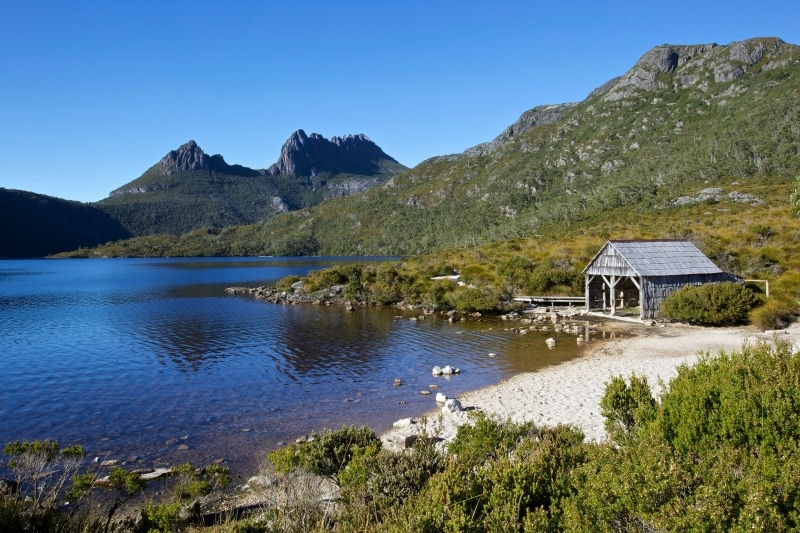
From the Spirit of Tasmania’s berth at Devonport to the rugged north-west corner of our island is a region of pretty villages, historic buildings, rocky shores, caves and fertile farmland. Life here is simple and sustaining – hosts are welcoming, meals are generous and the cares of the 21st century seem a lifetime away. Close to Devonport itself are the picturesque beaches of Port Sorell and the historic town of Latrobe, famous for its chocolates and platypuses. The backdrop to the main part of your journey, however, is the Great Western Tiers, known to the Aboriginal people as Kooparoona Niara. Behind this enormous escarpment sits the protected World Heritage Area of mountains and valleys, lakes and forests. Beneath the surface are extensive limestone caves in the Mole Creek Karst National Park. Mount Roland looms magnificently over fertile pastures around Sheffield, known as the town of murals, You can discover the history of the Kentish district from the murals themselves, or in local museums, but there are also many galleries and studies to browse in. Along the coast, Penguin and Ulverstone have a seductive beachside charm, and even the industrial port of Burnie has transformed itself into a creative centre. Look for Creative Paper, Lactos Cheese factory and tasting centre, and then top it off with a visit to Hellyers Road Distillery to try its superb single-malt whiskey. Follow the coast westward, beside Bass Strait: massive bluffs nudge out into the sea - Table Cape, just beyond Wynyard, flat-topped and fertile, with flowering tulips carpeting its fields in spring and Circular Head, where the historic village of Stanley sits leeside of the steep-sided Nut. Overlooking Stanley is Highfield Historic Site, built in 1832 for the Van Diemen's Land Company's chief agent. Continue west to Smithton, centre for the region’s productive agricultural and thriving forestry operations. From Smithton, the highway begins its last leap westward to Arthur River and the legendary surfing
|
Tasmania
Tasmania
Kempton was settled in the 1820s and originally called Green Ponds. The streetscape, with its inn, church and shops, is very much as it was in the 19th century, and Dysart House, now privately owned, at the southern end of town, is an exceedingly handsome mansion. The highway now bypasses the town but it is worth stopping by to explore. The first land grant went to Anthony Fenn Kemp, after whom the town was eventually named. You can see the entrance to his property – Mount Vernon – just south of Kempton. (You can find out more about the rather notorious Anthony Fenn Kemp in the wonderful novel, In Tasmania, by the British novelist, Nicholas Shakespeare, who spends part of each year here.) Kempton is 49 kilometres (31 miles) north of Hobart.
|
Bothwell - Australasian Golf Museum
Tasmania
Tasmania
Bothwell is the gateway to the central highland and was settled by Scottish pioneer farmers in the early 1820s. It has wide open streets, and lovely 19th century buildings. As you would expect it sits on the Clyde River, where Australia’s first herd of Aberdeen Angus cattle grazed, and, of course, the first golf course was laid, in the mid-1830s. Today you can play Ratho’s nine holes and visit the Australasian Golf Museum. Walking round the town is to walk back in time - more than 50 colonial cottages, houses and official buildings (the town’s first library opened in 1837) cluster around the trees and grass of Queens Park. Bothwell is a good base for fishing or exploring. Bothwell is on the A5, 73 kilometres (45 miles) northwest of Hobart.
|
Tasmania
Tasmania
Settlers from Norfolk Island established this town on the banks of the River Derwent in 1807 when the Island’s prison was closed. Early townspeople planted hundreds of poplar trees, which in autumn turn bright gold. The town with its population of more than 5,000 has one of Australia’s last village squares. It is the centre of the hop-growing area and there are several old oast houses (kilns) along the roadside. They aren’t used today but their elegant shapes give valley a deep sense of its history and some have been lovingly converted. New Norfolk has many old buildings, including one of Australia’s oldest inns, the Bush Inn, and Australia’s oldest Anglican church - St Matthews (1823). New Norfolk is 20 kilometres (12 miles) north-west of Hobart.
|
Tasmania
Tasmania
Corinna is a tiny historic mining town set in rainforest on the banks of the majestic Pieman River in Tasmania’s west. You reach the town from a number of directions. The C249 Highway north from Zeehan is unsealed and when you reach the Pieman River you take the Fatman barge, which ferries vehicles across the River. It is the only cable driven vehicular barge in Tasmania. The barge operates in daylight hours all year round. You can reach Corinna from Waratah on the B23 linking to the unsealed C247 or from Marrawah on the unsealed C249 Highway. Corinna sits at the southern end of the Tarkine protected area, the largest temperate rainforest in Australia, and is the northern most point where the famous Huon pine grows. The surrounding ancient unbroken tract of rainforest reveals a world beyond human memory and is a living link with the ancient super continent Gondwana. The town is 60 kilometres (37 miles) north of Strahan, 70 kilometres (43 miles) west of Cradle Mountain and 15 kilometres (nine miles) from the wild west coast. Today, you can stay at Corinna – a wilderness experience, in one of the restored miners’ cottage and take a guided tour on the Pieman River out to the Southern Ocean. Corinna, was once called Royenrine, and is the Aboriginal name for a young Tasmanian tiger. In the rip roaring days of the 1880s goldrush, Corinna had two hotels. In 1883, the largest nugget of gold ever discovered in Tasmania (7.5 kilos) was found at Rocky River, a small tributary of the Whyte River (a tributary of the Pieman) near Corinna. It aroused considerable excitement and attracted many men from other Tasmanian goldfields. The town rapidly declined from 1900 when the Emu Bay railway to Zeehan opened, and today it is a peaceful place to stay to explore the Tarkine forests and the history of the west coast. Remember you are on the west coast of Tasmania, which receives the winds of the Roaring Forties, so no matter when you visit be prepared with warm clothes and raingear.
|
Tasmania
Tasmania
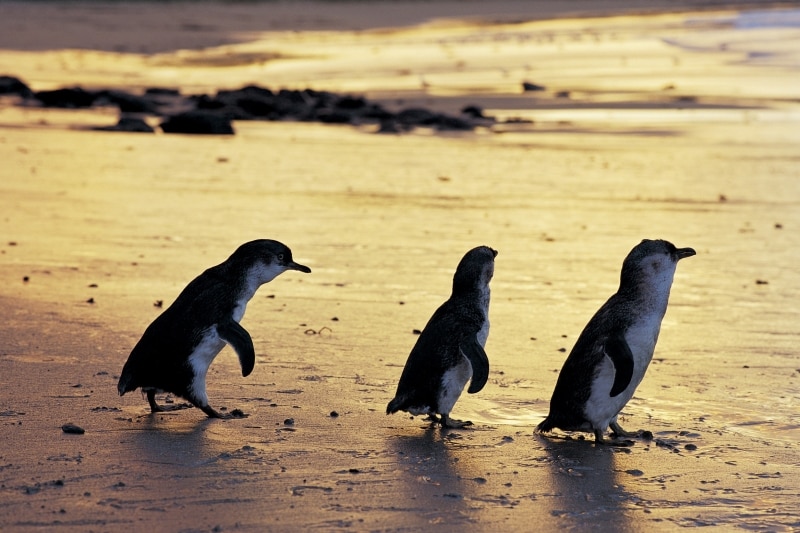
Penguin, on the northwest coast overlooking Bass Strait, is characterised by sleepy weekdays that turn into bustling weekends, a scenic esplanade, its friendly community and charming seaside cafés. The town’s population of nearly 3,000 rejoices in all things ‘penguin’ – from the penguin-shaped rubbish bins to the many penguin souvenirs available at the local market. Every Sunday the Penguin Market draws hundreds of visitors from along the coast and around the state. With more than 200 modern stalls – ranging from fine food and wine, to woodcraft and live music – Tasmania’s largest undercover market caters for the whole family. You can’t miss the largest penguin in the world, which has made the esplanade its home. The 3.15-metre (10-foot) cement and fibreglass bird was erected in 1975 to commemorate the centenary of the town. Hiscutt Park, with its Dutch windmill and playground, is a peaceful place for a picnic. Behind the town, Dial Range has several walking tracks to the mountain-tops with stunning views over Penguin and the north-west coast. Penguin was explored by Bass and Flinders and settled in 1861. It was named by Robert Campbell Gunn, after the small seabirds that live in rookeries along the north coast. Penguin was a originally a small timber and mining town, overshadowed by Burnie and Devonport. The average maximum temperature in Penguin is 21 degrees Celsius (70 degrees Fahrenheit) in January and 13.5 degrees Celsius ( 56 degrees Fahrenheit) in June. Penguin is 17 kilometres (10.5 miles) east of Burnie, or a pleasant fifteen minute drive west of Ulverstone through the Ling Perry Gardens along the coastal road.
|
Tasmania
Tasmania
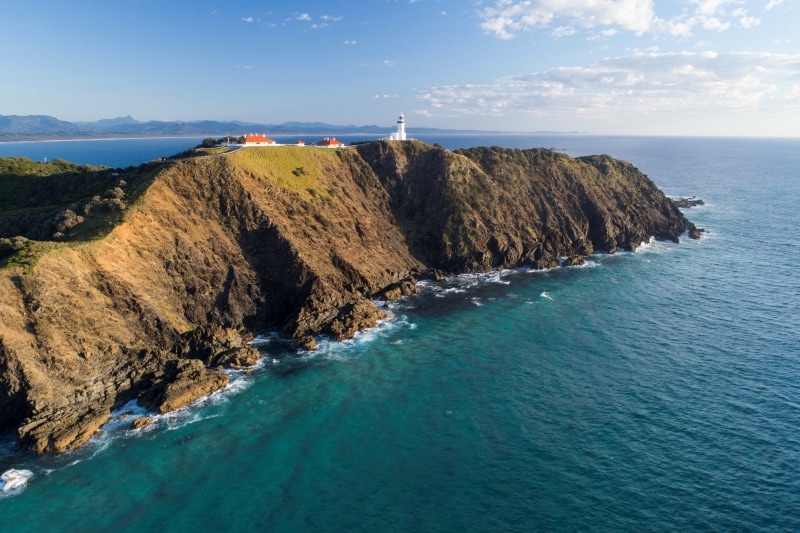
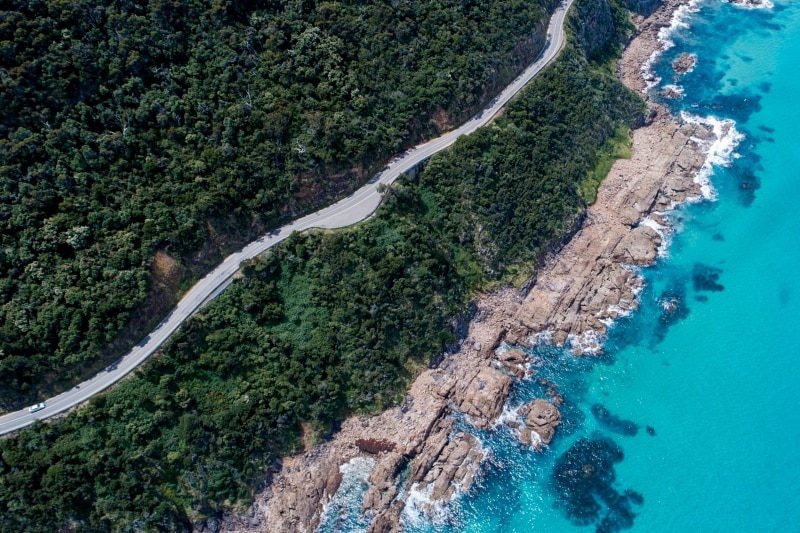
Wild seascapes, towering dolerite seacliffs and sweeping surf beaches, wonderful coastal walks, birdlife and wildflowers, tall forests and an historic lighthouse are all features of Bruny Island off the southeast corner of Tasmania. It is about the size of Singapore but has a population of around 500 people. Access is a 20-minute crossing by vehicular ferry from Kettering, 35 minutes' drive south of Hobart. It appears to be two separate islands but it is joined by the Neck (the isthmus connecting North and South Bruny Island). Adventure Bay, South Bruny, is where Capt William Bligh came ashore for water and provisions before heading off for his ill-fated mutiny in the South Pacific. Walks include the coastal track to Penguin Island and Fluted Cape, from Adventure Bay; beach walks on Cloudy Bay; or the full-day circuit of the Labillardiere Peninsula. A narrow gravel road links Lunawanna and Adventure Bay, giving wide, stunning south-westerly views. As you walk look out for Bennetts wallabies, pademelons, echidna and wombats. From November to April each year the short-tailed shearwaters arrive to mate and breed along the shore before heading out on their heroic journey to the northern hemisphere. The lighthouse at Cape Bruny was built between 1836 and 1838 with convict labour. The Bruny Island Ferry Service runs seven days a week and you can check the timetable at (03) 6273 6725.
|
Tasmania
Tasmania
Westbury, 25 kilometres (15.5 miles) west of Launceston, is a classic Georgian village surrounded by hedgerows and lanes reminiscent of England. The Village Green was originally a military camp. The surrounding land is rich and fertile and originally settled by Irish framers. There are many interesting attractions here - the Culzean gardens established in the 1840s, the Pearns Steam World collection of hundred-year-old agricultural machinery, the Westbury Maze, the National Trust’s White House built in the 1840s, and antique shops.
|
Eaglehawk Neck, aerial view
Tasmania
Tasmania
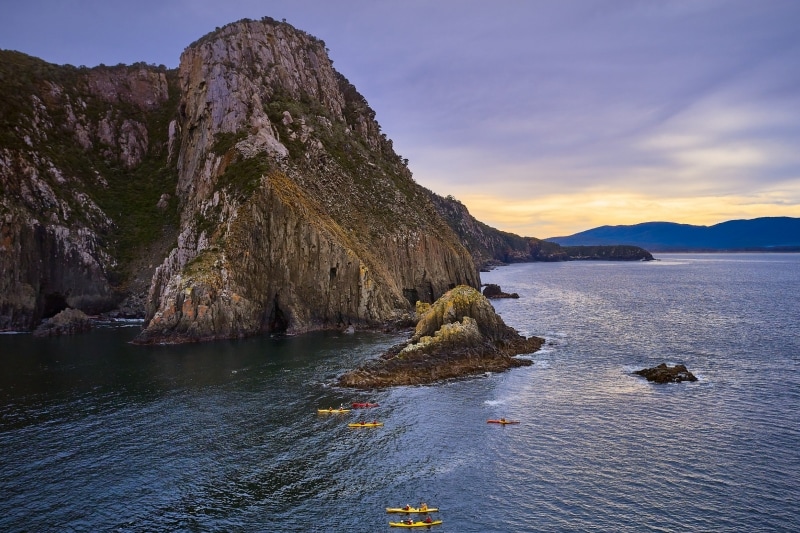
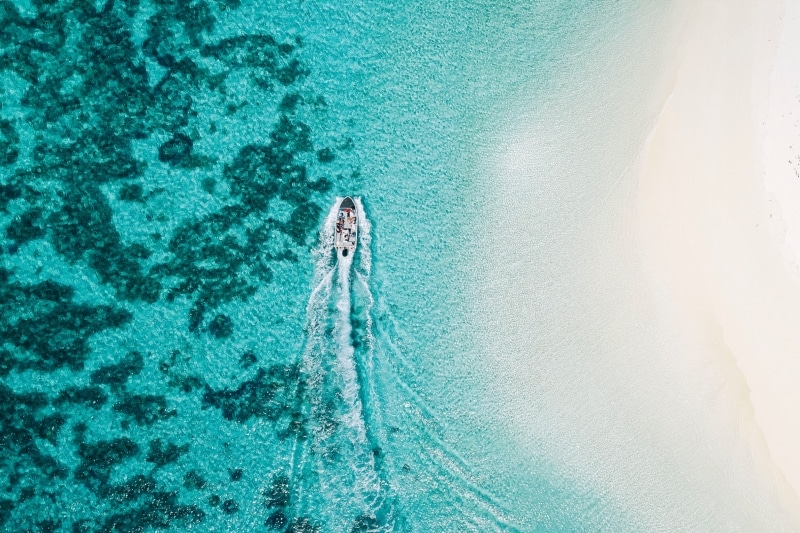
Eaglehawk Neck is an uncommonly beautiful place. The isthmus is flanked by the calm waters of Norfolk Bay on one side and Pirates Bay opening onto the Tasman Sea on the other. The quiet village is the gateway to the many attractions of the Tasman Peninsula, including Port Arthur Historic Site, dramatic sea cliffs, white sandy beaches and some of the best surf in the State. The distinguishing feature of the landscape is its remarkable geology. At the neck itself is the Tessellated Pavement, while a short drive south are the impressive coastal rock formations of the Devils Kitchen, Tasman Arch and the Blowhole. The Totem Pole is an offshore favourite with rock climbers and kayakers. Cruises from Pirates Bay take you along some of the most dramatic coastline you’ll ever experience, through regions rich in seals, dolphins and penguins. Towering dolerite and sandstone sea cliffs extend deep into the ocean, providing a wonderful array of caves and crevasses for divers to explore. Tasmania’s temperate waters are renowned for their excellent visibility, adding to the magic of swimming amongst weedy sea dragons, sponges, fish, giant kelp forests and a wide variety of invertebrates. Waterfall Bay, in the Tasman National Park just south of the township, is considered one of the best boat diving areas in Tasmania. It is suitable for all levels of diving experience, and is also a dramatic place for bushwalking. In colonial times the isthmus was guarded by ferocious dogs intended to ensure no convicts escaped the Port Arthur penal settlement. While little remains of the Eaglehawk Neck historic site, the infamous dogline has been marked by a bronze dog sculpture, and there’s a small museum in the former Officers Quarters. Eaglehawk Neck is approximately an hour’s drive (75 kilometres, or 46.5 miles) south-east of Hobart. Its average maximum is 18.5 degrees Celsius (65.5 degrees Fahrenheit) in January and 11.5 degrees Celsius (52.5 degrees Fahrenheit) in June.
|
Greens Beach - Narawntapu National Park
Tasmania
Tasmania
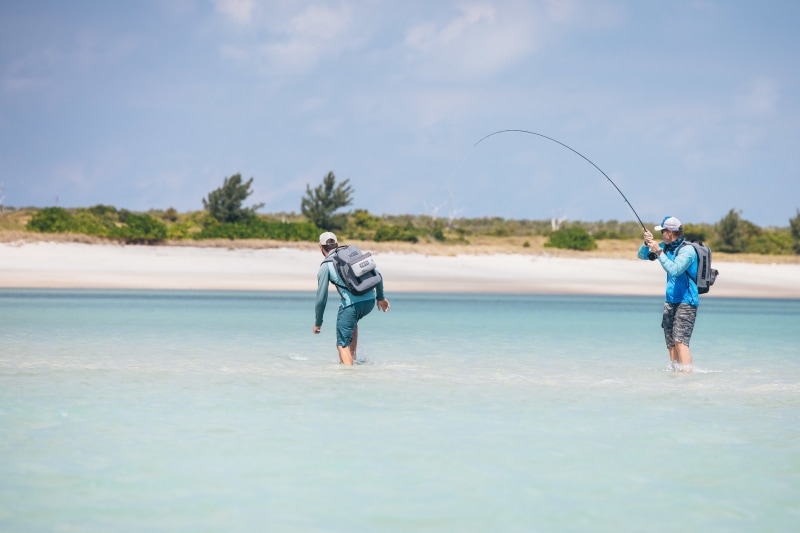
Approximately 60 kilometres (37 miles) north-west of Launceston and at the mouth of the Tamar River lies Greens Beach, a take-off point for Narawntapu National Park. Narawntapu National Park has three access points at Bakers Beach, Badger Head and Greens Beach. The latter has to be the best reward for least effort; from the carpark it is an easy 270 metre (295 yard) walk to the West Head lookout for spectacular clifftop views along Badger Head beach and beyond westward as far as Table Cape and the Dial Ranges behind Ulverstone. Discover nearby Kelso Beach and enjoy a great spot for fishing. You can access Garden Island on Clarence Point, now a barren lookout point at the mouth of the Tamar River. It was excavated and backfilled towards the shore to improve the shipping channel in the river. There are plenty of oysters and good fishing here and it is also a scenic lookout.
|