Goulburn Islands Northern Territory
Northern Territory
Northern Territory
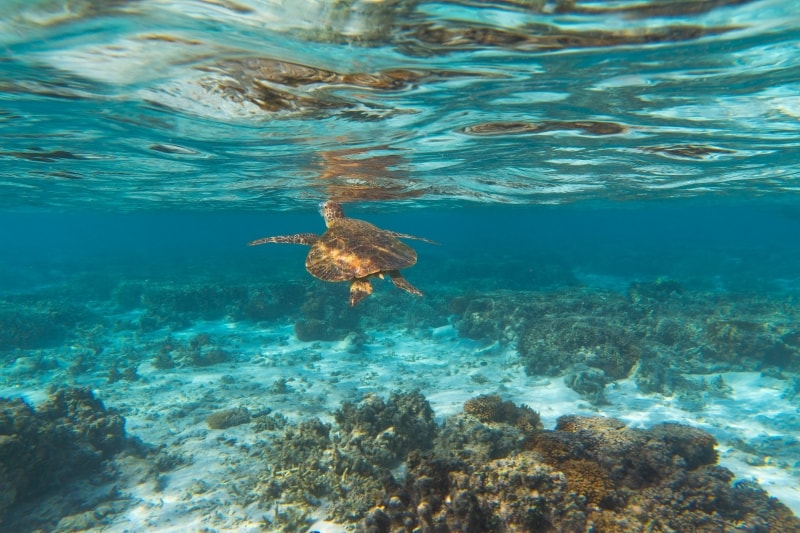
The North and South Goulburn Islands are located in Auray Bay off the northern Arnhem Land coast. The islands are Aboriginal-owned and permits from the Northern Land Council are essential for all visitors. The Goulburn Islands are not set up for tourism, but intrepid sailors and fishermen may occasionally find themselves on their shores. The Warruwi people are the traditional owners of the Goulburn Islands and the main language, Mawng, is spoken by about 750 people. Warruwi community is located on the southern tip of the south island and is a dry community (no alcohol). Fishing is the main pastime of local people, who are allowed to hunt the turtles and dugong prevalent in the area. The lifestyle is slow and relaxing and the climate is slightly cooler than Darwin.
|
Maningrida Northern Territory
Northern Territory
Northern Territory
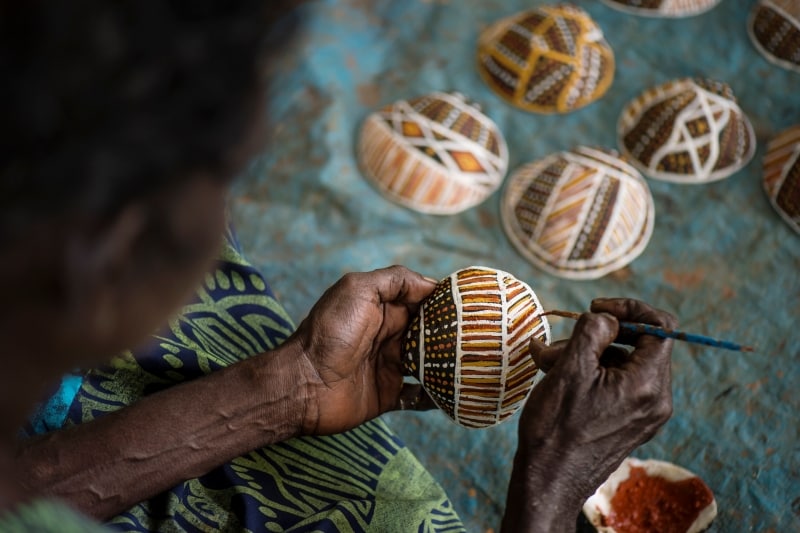
The Maningrida community lies on the north coast of Arnhem Land and is best known as a pristine fishing destination. Travellers need a permit from the Northern Land Council to visit. Maningrida’s waterways are teeming with species such as barramundi, salmon, mangrove jack, golden snapper, Spanish mackerel, trevally and coral trout. Visitors can also learn about Aboriginal art and culture at the Maningrida Arts and Culture, which features traditional and contemporary art, bark paintings, sculptures, fibre craft, prints and items of material culture. Conical woven fish traps made by the local men and women are unique to the area and a popular collector’s item.
|
Pine Creek Northern Territory
Northern Territory
Northern Territory
Established in the late 1800s after a gold rush in the area, Pine Creek is located 90 kilometres north of Katherine. The town is a treasure trove of heritage bush buildings and mining sites. Echoes of the gold rush days are still evident in the historic Pine Creek Settlement. Gold was discovered at Pine Creek in 1871 by construction workers on the Overland Telegraph Line. There is a small and informative museum and preserved railway station within the township. The township is small but offers a range of accommodation options, including caravan parks and cabins. Many of the original buildings still stand, allowing travellers to soak up some of the old pioneering spirit. Step back in time by driving the Northern Goldfields Loop Heritage trail that takes you from Pine Creek to Adelaide River and on to the fascinating Grove Hill Heritage Hotel, an insight into life during the era. Pine Creek is full of colourful characters and friendly locals. Next door to the Pine Creek Pub is the famous Maysie’s Cafe. With decor inspired by 1950s American diners, walls adorned with pictures of classic Hollywood glamour, and the shirt Leonardo De Caprio wore in Romeo and Juliet, this charming little pit-stop serves delicious mango smoothies.
|
Palmerston Northern Territory
Northern Territory
Northern Territory
Palmerston is a dynamic city offering all modern facilities and a great base from which to explore the Darwin region. Palmerston is located just 22 kilometres (or a short 25 minute drive) from the centre of Darwin and has a population of 25,000. Palmerston is the site of the Australian Army’s Robertson Barracks, purpose built for the First Brigade as part of the Army Presence in the North Project. There are several shopping centres at Palmerston and a pleasant 18 hole golf course. The surrounding rural area has many mango farms. Another popular attraction is Marlow Lagoon, a picturesque lake and park, which also offers an area for off-leash dog walking.
|
Croker Island Northern Territory
Northern Territory
Northern Territory
Croker Island is approximately one hour via light plane from Darwin and located at the meeting place of the Arafura Sea and the Timor Sea. The traditional owners are the Yammirr people and a permit from the Northern Land Council is required for all visitors to the island. Many Aboriginal people acknowledge Croker Island as the birthplace of the Rainbow Serpent – one of the most important spiritual beings in tales of the Dreamtime. The island landscape is flat and covered with tropical rainforest, fringed by sandy beaches and coral reef. Birds including the brolga and jabiru are abundant and fishing is a popular drawcard with anglers bringing in a range of fish such as trevally, queenfish, Spanish mackerel and mangrove jack. There is one general store on Croker Island and supplies are flown in once a week from Darwin.
|
Nhulunbuy / Gove Northern Territory
Northern Territory
Northern Territory
The settlement of Nhulunbuy/Gove is approximately 600 kilometres from Darwin, on the eastern-most tip of the Gove Peninsula. The Gove Peninsula encompasses nearly 100,000 square kilometres of land owned by the Yolngu Aboriginal people and is famous for spectacular beaches and great fishing. The mangrove-fed waters of the Peninsula are jumping with all types of prized tropical species with several charters and fishing tours available. Nhulunbuy was built in the early 1970s to service the bauxite mine managed by Nabalco. If you plan to travel by the Central Arnhem Road to Nhulunbuy, you will require a permit from the Northern Land Council. The Garma Festival is a celebration of Yolngu culture that takes place near Nhulunbuy every August and it is considered one of the most important indigenous festivals in Australia.
|
Arnhem Land Northern Territory
Northern Territory
Northern Territory
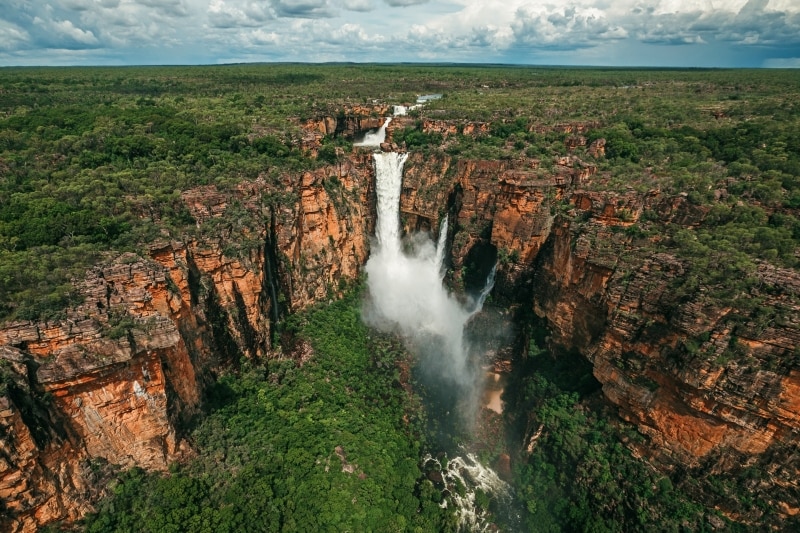
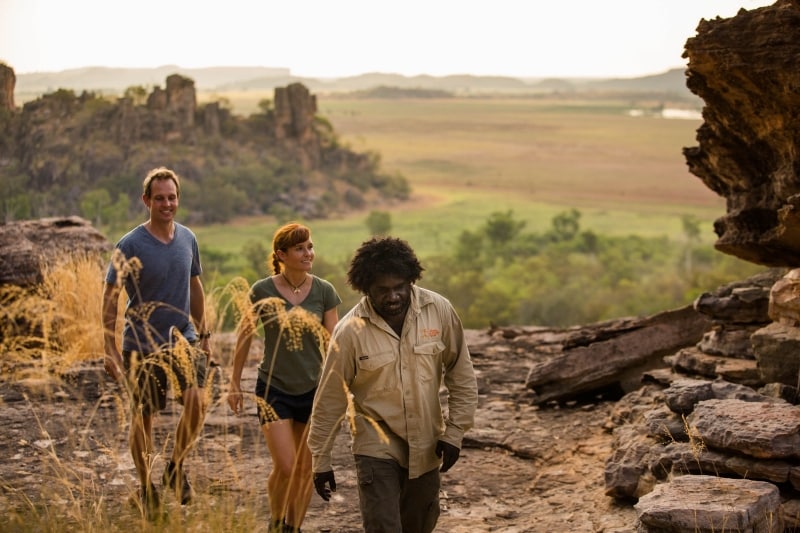
Arnhem Land is made up of 91,000 square kilometres of unspoiled wilderness bordered by Kakadu National Park, the Arafura Sea and the Gulf of Carpentaria. Travellers wishing to visit Arnhem Land must obtain a permit in advance from the Northern Land Council. Alternatively, many organised tours visit the region, and in these cases a permit is usually organised by the tour operator. Arnhem Land is rich in culture and features a diverse landscape characterised by wild coastlines, towering escarpments, savannah woodlands and wetlands teeming with wildlife. The park protects wetlands of international importance and provides a habitat for abundant wildlife, including crocodiles, dugongs, nesting turtles and migratory birds. Townships within Arnhem Land include Maningrida and Nhulunbuy and the (ruins) of the Victoria Settlement on the Cobourg Peninsula.
|
Arnhem Land Area Northern Territory
Northern Territory
Northern Territory
Arnhem Land is made up of 91,000 square kilometres of unspoiled wilderness bordered by Kakadu National Park, the Arafura Sea and the Gulf of Carpentaria. Travellers wishing to visit Arnhem Land must obtain a permit in advance from the Northern Land Council. Alternatively, many organised tours visit the region, and in these cases a permit is usually organised by the tour operator. Arnhem Land is rich in culture and features a diverse landscape characterised by wild coastlines, towering escarpments, savannah woodlands and wetlands teeming with wildlife. The park protects wetlands of international importance and provides a habitat for abundant wildlife, including crocodiles, dugongs, nesting turtles and migratory birds. The town of Maningrida, on the north coast of Arnhem Land, is famous for its indigenous art. Gunbalanya, one of the first stops east of Kakadu National Park, is an Aboriginal community where indigenous artists gather at the Injalak Art and Craft Centre. An open day is held in Gunbalanya usually during July, when travellers can visit freely and enjoy the cultural activities without a permit. The town of Nhulunbuy is located on the Gove Peninsula, approximately 600 kilometres east of Darwin. It is a major service centre, providing accommodation and supplies, and offers spectacular beaches and great fishing. There are many areas of historic significance including the ruins of an early European colony at Victoria Settlement in Garig Gunak Barlu National Park on the secluded Coburg Peninsula and the Black Point Cultural Centre which displays Aboriginal, Macassan and European histories of the area.
|
Adelaide River - Northern Territory
Northern Territory
Northern Territory
The Adelaide River settlement is located on the banks of the river, 114 kilometres south of Darwin. The scenic village has a rich history and was the site of a major military headquarters during World War II. It is a small community with a population of just 250 and an ideal stop-off point between Darwin and Katherine. The highlight of a visit to Adelaide River is the beautifully maintained World War II cemetery which can be easily found in a peaceful location by the banks of the river. Some 434 servicemen and 63 civilians killed in the Top End are buried here. Among the civilians are 9 Post Office workers who were killed on February 19, 1942 during the first of the Japanese air raids on Darwin. Also of interest to visitors is the Adelaide River Pub set among shady trees and green lawns, it is an ideal lunch destination with the popular house special of barra and chips. The old railway bridge and station (now a museum), which was a major enterprise at the time of completion in 1889, is also worth a visit. The Adelaide River itself flows north from the settlement and reaches the Timor Sea approximately 50 kilometres north-east of Darwin.
|
Cobourg Peninsula - Kakadu Area - Northern Territory
Northern Territory
Northern Territory
The Cobourg Peninsula is home to some of the best reef and tropical sports fishing locations in the world. Situated on the western tip of Arnhem Land, Garig Gunak Barlu National Park encompasses most of this remote peninsula, which features sandy beaches, coastal grasslands, mangroves, rainforest patches, swamps, lagoons, coral reefs and seas grass meadows. To reach the Cobourg Peninsula by sea it takes approximately two sailing days (150 nautical miles) from Darwin. If travelling by road allow two or three days in a four-wheel drive (road access is only possible from May to October and is via Kakadu National Park). A permit from the Northern Land Council is essential for all travellers. Tours can be organised where the operator organises a permit and transport. There are many areas of historic significance including the ruins of an early European colony at Victoria Settlement in Garig Gunak Barlu National Park on the secluded Coburg Peninsula. However many who come to Cobourg Peninsula have just one thing on their minds – fishing. The quality of fishing is world-class, and Cobourg Peninsula has plenty of mangrove-lined creeks and billabongs jumping with barramundi, mangrove jack and other sportfish. The ocean teems with barracuda, queen fish, trevally, coral trout and jewfish. Protected sea life including turtles, crocodiles, dugongs and dolphins can also be seen in the area.
|