






































































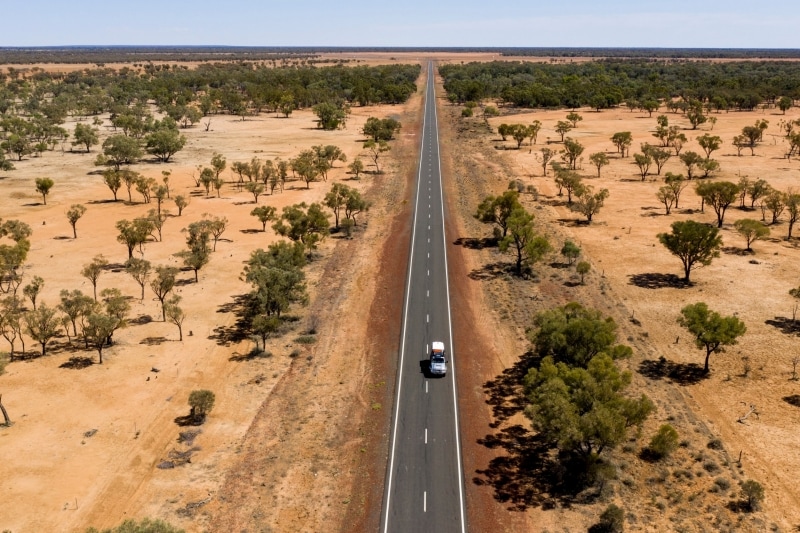

Yellow road signs featuring silhouettes of a camel, wombat, and kangaroo stand beside an open highway under bright sunlight along the Eyre Highway, Nullarbor, South Australia. © Greg Snell, Tourism Australia

Eyre Highway, Nullarbor, South Australia © Greg Snell, Tourism Australia


Trip overview

5 days
car
905km (562mi)

Day 1: Norseman to Balladonia

2.5hrs 218km (135mi)

The Nullarbor road trip officially begins in Norseman, an eight-hour drive east of Perth. The first day kickstarts your adventure with the world’s longest golf course, historic outback towns and the biggest temperate woodland on Earth. Spend the night at Balladonia Hotel Motel.

Day 2: Balladonia to Caiguna

1.5hrs 153km (95mi)

Today is all about the 90 Mile Straight – Australia’s longest and straightest road. Get your road trip tunes ready.

Day 3: Caiguna to Border Village

3.5hrs 350km (217mi)

Today you’ll pass the midway point between Adelaide and Perth. Get to know Eucla, the largest settlement on the Nullarbor Plain, before crossing the South Australian border.

Day 4: Border Village to Nullarbor Roadhouse

2hrs 184km (114mi)

Drive alongside the spectacular Bunda Cliffs through Nullarbor National Park. From Nullarbor Roadhouse, uncover the natural wonders of the Head of Bight.

Day 5: Nullarbor Roadhouse to Ceduna

Marvel at marine life and captivating artwork as you wrap up your Nullarbor adventure. From Ceduna, continue exploring the Eyre Peninsula or head to Adelaide.

Frequently Asked Questions

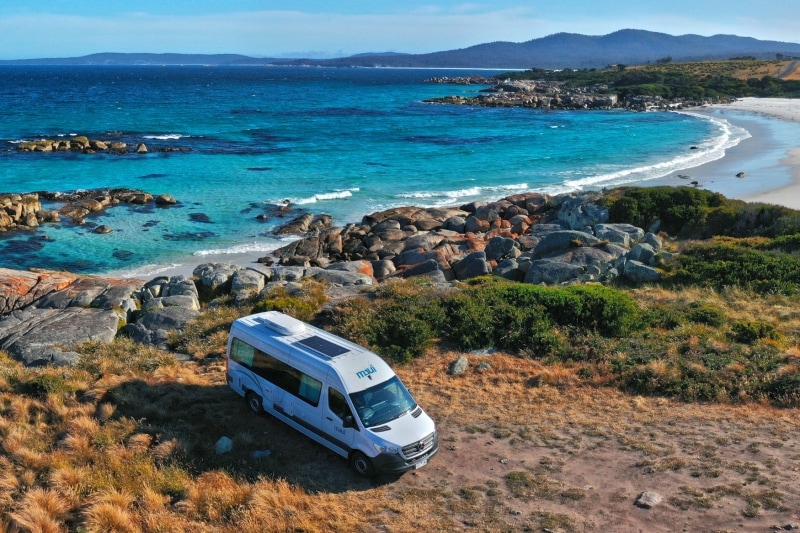
When hiring a campervan for a journey across the Nullarbor Plain, it’s worth checking details like inclusions, one-way options and automatic transmission.

  • Inclusions: Campervan hire may come with inclusions like basic cooking equipment, but may not provide items like bed linen, camping chairs or a GPS.
  • One-way hire: A one-way hire is the most practical option for the Nullarbor. While this can sometimes be more expensive than a return hire, it saves you from backtracking and fits naturally with the direction of the journey. 
  • Transmission: If you prefer an automatic transmission, make sure to request it when booking, as availability can be limited.
  • Fuel efficiency: Choosing a comfortable, fuel-efficient vehicle is important for long driving stretches, including iconic sections like the 90 Mile Straight. 
  • Fuel stops: Fuel planning is especially important, as services can be limited between remote stops. This itinerary is designed with practical overnight stops at roadhouses and caravan parks, making it well suited to campervan travel.
  • Before departure: Before you depart, take time to inspect your vehicle and familiarise yourself with how everything works. 

The Nullarbor Plain can be driven year-round, but the most comfortable time is generally between April and October. Here's why:

  • Mild temperatures: Temperatures are milder between April and October, making it more enjoyable to drive long distances and stop along the way at highlights like the dramatic Bunda Cliffs. 
  • Whale migration season: This period also aligns with whale season (June to October), when you may be lucky enough to spot southern right whales from the Head of Bight Whale Watching Centre – a truly special experience along the journey!

While the Nullarbor can be crossed in summer (December to February), it’s important to be aware that temperatures can exceed 40°C (104ºF), and the heat can make driving conditions more challenging.

When driving across the Nullarbor Plain, it’s important to be well prepared, as this is one of Australia’s most remote road journeys. Here's what you should know:

  • Basic road safety: Be sure you know Australia's basic road safety rules . Following these will help ensure a smooth and enjoyable trip, especially when travelling long distances between stops.
  • Speed limits: Follow posted speed limit signs, even in perfect conditions.
  • Left-side driving: In Australia, vehicles drive on the left-hand side of the road. Be sure to start slow and take your time if you typically drive on the right.
  • Seat belts and child constraints: All passengers must wear a seat belt in Australia. Children under seven must also use an approved child restraint appropriate for their size.
  • Driving at dawn and dusk: Take extra care when driving at dawn or dusk, as wildlife is particularly active near roads during these times.
  • Plan ahead: Because distances between services can be long, it’s essential to plan ahead. Take regular breaks to avoid fatigue, and always carry enough water, snacks and fuel before setting out each day.

Accommodation along the Nullarbor Plain is mainly found at remote roadhouses and small settlements dotted along the highway. Places such as Eucla and Caiguna offer simple but practical options including motel rooms, caravan parks and basic facilities, perfect for breaking up the journey in this very remote part of Australia.

Getting between stops is done entirely by car, and the drive itself is a key part of the experience. Distances can be significant, with most travellers covering around 300–500km (185-310mi) per day depending on their itinerary, comfort level and how often they choose to stop and explore along the way.

A road trip across the Nullarbor Plain is an unforgettable experience, but preparation is really important given how remote the region is. Here's what you should know:

  • Food and water: Make sure to carry plenty of water and snacks, as services can be widely spaced (often 150-200km / 95-125mi apart) so it’s best not to rely on frequent stops. 
  • Fuel stops: Careful fuel planning is also essential, and it’s a good idea to top up whenever you have the chance.
  • Sun protection: Sun protection such as sunscreen, sunglasses and a hat is essential during the day, as shade can be scarce in this part of Australia. 
  • Clothing layers: Warm layers are useful for evenings, as night temperatures in the outback can drop dramatically. 
  • Mobile reception: Because mobile reception is limited or non-existent in many stretches, it’s also helpful to download maps offline and bring entertainment for the drive.