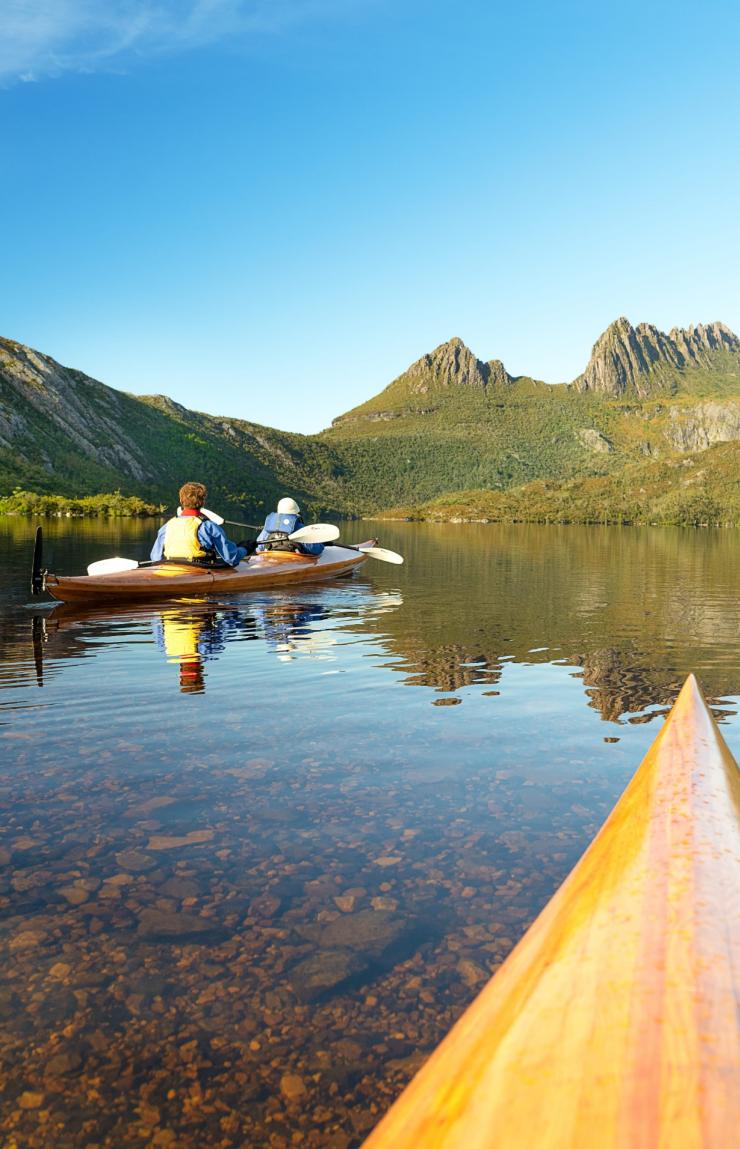













Dove Lake, Cradle-Mountain Lake St Clare National Park, Tasmania
Guide to Cradle Mountain-Lake St Clair National Park
Tasmania’s majestic mountains make for the perfect wilderness adventure.
Dramatic, serrated peaks, glacial-carved lakes, unique grasslands and ancient rainforest define Cradle Mountain-Lake St Clair National Park. Within the World Heritage-listed Tasmanian Wilderness Area, Cradle Mountain offers world-class hikes, unique wildlife experiences and a truly profound connection to nature.
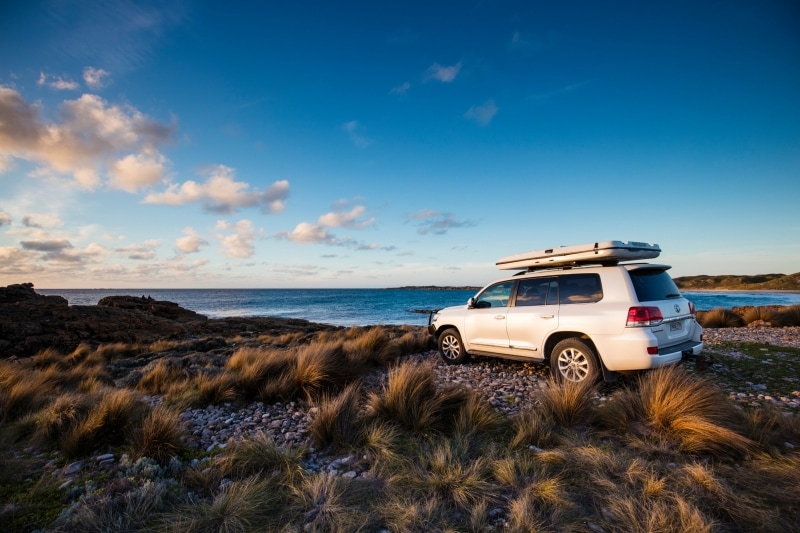
The easiest way to get to Cradle Mountain-Lake St Clair National Park is by car. There are two main entrances into the park, one in the north and one in the south. The northern entrance is a 2.5-hour drive from Launceston, and the southern entrance is a 2.5-hour drive from Hobart. There is no direct link to connect the northern and southern entrances.
- A shuttle bus runs within the park and private vehicles are not permitted to enter during shuttle operating times (8am to 6pm during summer and 9am to 5pm during winter)
- Visitors are encouraged to park at the Cradle Mountain Visitor Centre
There are also several guided tours that will give you an expert’s experience of the park.
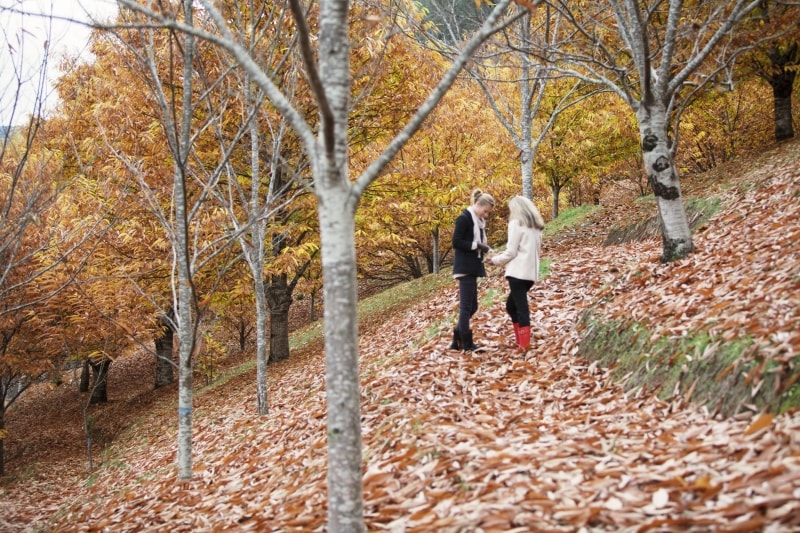
Weather near Cradle Mountain-Lake St Clair National Park can be somewhat unpredictable. However, you can typically bet on mild summer temperatures and a blanket of snow in the winter. Summer and autumn are great for exploring the hiking trails. There are several access roads into Cradle Mountain and some can see closures during winter, so be sure to check ahead before driving.
- High season: Late spring to early autumn (November to March)
- Low season: Winter (June to August)
- Don’t miss: A chance to see the Southern Lights (Aurora Australis), most common during winter
Điều kiện thời tiết tại công viên này có thể thay đổi rất nhanh. Tuyết, mưa, gió và nắng có thể xuất hiện vào bất kỳ thời điểm nào trong năm, còn cháy rừng có thể xảy ra trong khoảng từ tháng Mười đến tháng Ba. Bạn đừng để bị động – hãy kiểm tra dự báo thời tiết và các cảnh báo. Khi đi bộ đường dài ở môi trường núi cao, hãy luôn mang theo trang phục ấm áp và chống nước để mặc thành nhiều lớp. Chỉ nên chọn những tuyến đường phù hợp với mức độ thể lực cũng như kinh nghiệm đi bộ ngoài trời của bản thân. Hãy linh hoạt: bạn nên quay trở lại nếu điều kiện thời tiết xấu đi.
Hãy lên kế hoạch đi bộ an toàn, tránh đi một mình và nên báo cho ai đó biết về kế hoạch của bạn trước khi khởi hành. Nhớ mang theo Thiết bị định vị cá nhân (Personal Locator Beacon - PLB) và nếu có sổ nhật ký hành trình, hãy ghi rõ những dự định của bạn trong chuyến đi. Các cung đường đi bộ Cấp độ 4 và 5 chỉ dành cho những người đi bộ đường dài có nhiều kinh nghiệm, được trang bị đầy đủ để ứng phó với sự thay đổi thời tiết khắc nghiệt và những chặng đường dài, hiểm trở, dốc đứng. Trước khi bạn đến, hãy kiểm tra các cảnh báo, thông báo đóng cửa và thông tin an toàn quan trọng của công viên.