



















































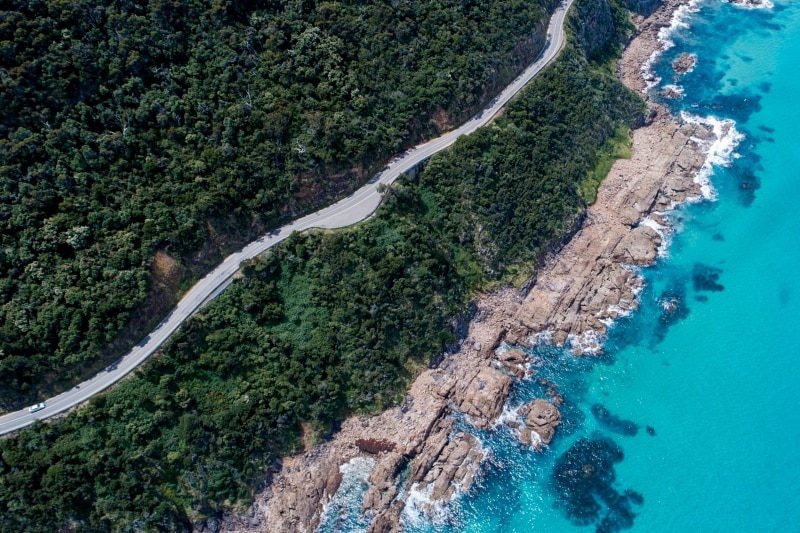

































Aerial view of the Sea Cliff Bridge suspended over the ocean in Clifton, New South Wales ©  Destination NSW

Sea Cliff Bridge, Clifton, New South Wales © Destination NSW


Trip overview

9 days
Car, boat
1,475km (916mi)

Day 1: Sydney to Jervis Bay

3hrs 199km (124mi)

Start your journey in Sydney, heading south to explore treasures along the New South Wales coast.

Day 2: Jervis Bay to Central Tilba

3.5hrs 230km (143mi)

Continue south from Jervis Bay to the oyster town of Batemans Bay and historic Central Tilba.

Day 3: Tilba to Merimbula

1hrs 93km (58mi)

Buckle up for a day of incredible food, rugged national parks and charming seaside villages on the Sapphire Coast.

Day 4: Merimbula to Mallacoota

1.5hrs 115km (71mi)

Today you’ll drive to Mallacoota, at the eastern end of Victoria’s scenic Gippsland region.

Day 5: Mallacoota to Lakes Entrance

2.5hrs 202km (125mi)

Continue deep into Victoria’s Gippsland region, home to pristine beaches and a vast lake system.

Day 6: Lakes Entrance to Walhalla

2.5hrs 196km (122mi)

Head inland from Lakes Entrance to find a history-soaked haven in Victoria.

Day 7: Walhalla to Wilsons Promontory

2.5hrs 189km (117mi)

Rainforests, charming country towns and a striking coastal national park await on this section of the drive.

Day 8: Wilsons Promontory to Phillip Island

1.5hrs 117km (73mi)

Cruise down coastal roads from one stunning destination to the next.

Day 9: Phillip Island to Melbourne

2hrs 141km (88mi)

Linger on Phillip Island before ending your epic journey in cosmopolitan Melbourne.

Frequently Asked Questions

You can easily rent a car in Australia, and it’s a great way to explore routes like the coastal drive between Sydney and Melbourne.

To rent a vehicle, you’ll generally need:

  • A valid U.S. driver’s licence (as it’s in English, an International Driving Permit is usually not required)
  • A passport for identification
  • A credit card in the driver’s name for payment and security deposit

Most rental companies also require drivers to:

  •  Be at least 21 years old, with additional surcharges often applying to drivers under 25
  • Have held a full driver’s licence for at least 12 months
  • Hold a licence valid for the type of vehicle being hired

You’ll find major rental companies at airports, city centres and regional locations across Australia, making pick-up and drop-off easy. It’s a good idea to book online in advance for better rates, especially during busy travel periods. You may also want to review insurance options carefully, as basic cover is usually included, with the option to reduce your excess for extra peace of mind.
It’s also important to note that in Australia, driving is on the left-hand side of the road. Coming from driving on the right-hand side in the US, it may take a little time to adjust, so allowing extra time to get comfortable behind the wheel is a good idea.

You can easily rent a car in Australia, and it’s a great way to explore routes like the coastal drive between Sydney and Melbourne.

To rent a vehicle, you’ll generally need:

  • A valid UK driver’s licence (as it’s in English, an International Driving Permit is usually not required)
  • A passport for identification
  • A credit card in the driver’s name for payment and security deposit

Most rental companies also require drivers to:

  • Be at least 21 years old, with additional surcharges often applying to drivers under 25
  • Have held a full driver’s licence for at least 12 months
  • Hold a licence valid for the type of vehicle being hired

In Australia, driving is on the left-hand side of the road, just like in the UK, which makes the transition behind the wheel relatively straightforward for most travellers.

You’ll find major rental companies at airports, city centres and regional locations across Australia, making pick-up and drop-off easy. It’s a good idea to book online in advance for better rates, especially during busy travel periods. You may also want to review insurance options carefully, as basic cover is usually included, with the option to reduce your excess for extra peace of mind.

You can rent a car in Australia, and it’s a great way to explore routes like the coastal drive between Sydney and Melbourne, but there are a few important requirements to be aware of.

To rent a vehicle, you’ll generally need:

  • A valid Chinese driver’s licence
  • An official English translation of your licence (as China does not issue International Driving Permits)
  • A passport for identification
  • A credit card in the driver’s name for payment and security deposit


Most rental companies also require drivers to:

  • Be at least 21 years old, with additional surcharges often applying to drivers under 25
  • Have held a full licence for at least 12 months
  • Hold a licence valid for the type of vehicle being hired

Rental companies may have slightly different requirements, so it’s worth checking with your provider before you travel. You’ll find major rental companies at airports, city centres and regional locations across Australia, making pick-up and drop-off straightforward. It’s a good idea to book online in advance for better rates, especially during busy travel periods.

It’s also important to note that in Australia, driving is on the left-hand side of the road. Coming from driving on the right-hand side in China, it may take a little time to adjust, so allowing extra time to get comfortable behind the wheel is a good idea.

Absolutely, this coastal journey is designed to be flexible. You can just as easily travel in reverse, starting in Melbourne and finishing in Sydney.

Because the route follows a well-connected stretch of coastline, it’s easy to tailor the experience to suit your travel style. You can adjust overnight stops, take scenic detours, or spend extra time in places that stand out to you along the way. Popular highlights such as Jervis Bay and Wilsons Promontory National Park are especially worth stopping in if you have the time, with beautiful beaches, national parks and plenty of opportunities to slow down and explore.

You can enjoy the coastal drive between Sydney and Melbourne at any time of year, but spring (September to November) and autumn (March to May) are particularly beautiful. These seasons offer mild temperatures and ideal conditions for exploring coastal towns, national parks and beaches, while avoiding the peak summer crowds.

Summer (December to February) is popular for swimming, beach stops and long sunny days, though it can be busier with holiday travellers and higher accommodation prices. Winter (June to August) is cooler but still a great option for a road trip, especially for whale watching along parts of the coast and escaping the crowds.

The coastal drive between Sydney and Melbourne is a spectacular journey, but it’s worth planning ahead, especially if you’re used to dense highway networks.

Along this route, distances between towns can be longer than they appear on a map, and it’s common to drive two to four hours between major stops, particularly through quieter regions like the Sapphire Coast and East Gippsland. The journey is designed as a series of manageable driving days, with scenic stops in places like Jervis Bay, Narooma and Lakes Entrance, but services such as fuel stations and convenience stores can be limited between them.

To make the most of the experience, it’s a good idea to plan your fuel stops in advance and top up your tank whenever you have the opportunity. Allowing a little extra time in your schedule also means you can enjoy the journey without feeling rushed.