






























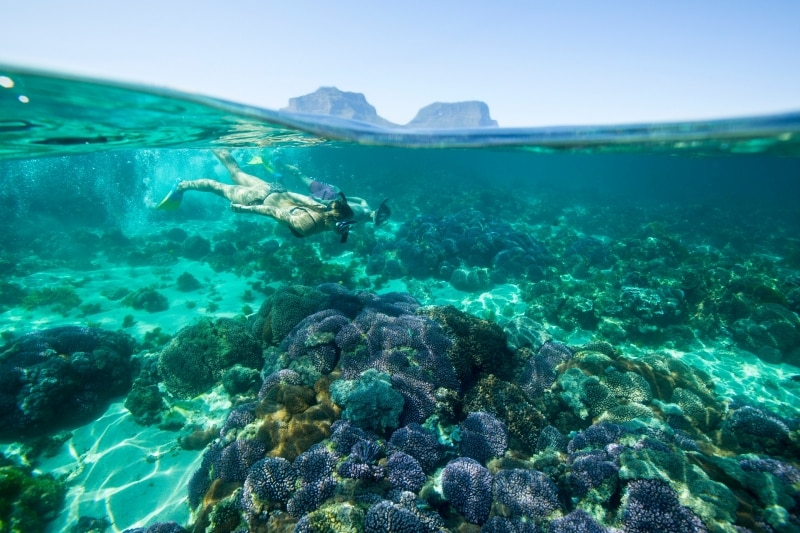







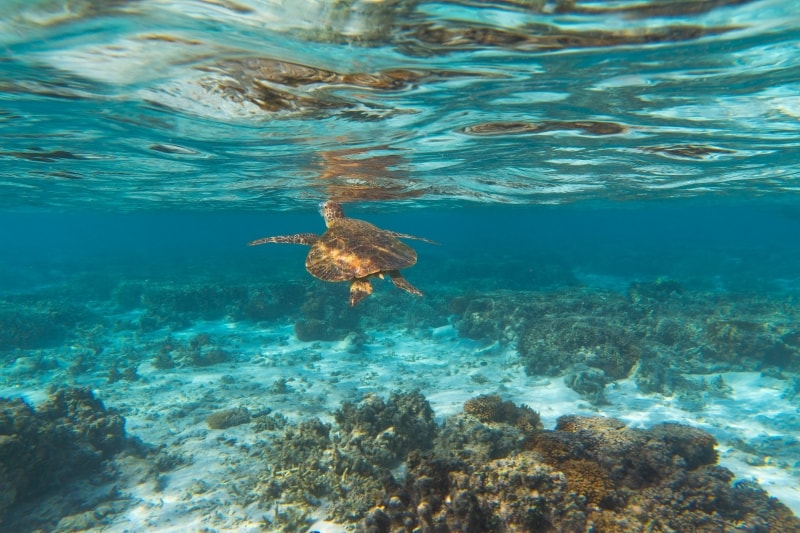









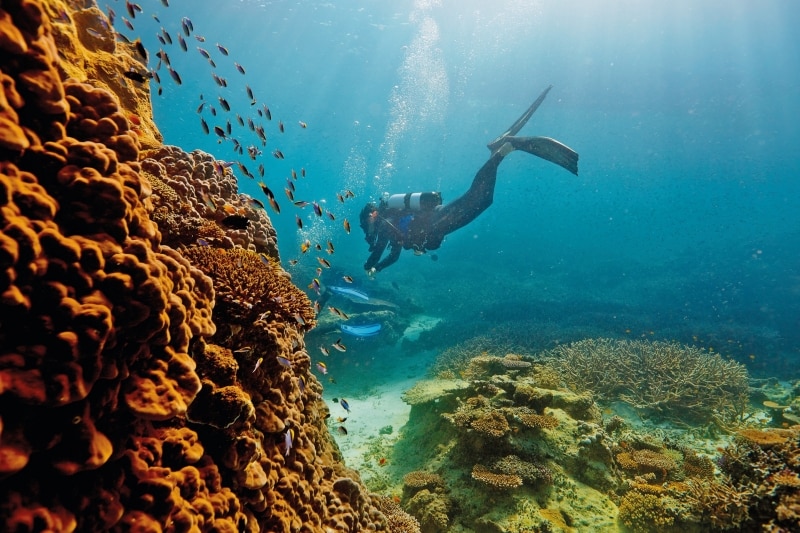

















































A snorkeller glides beneath the clear surface of turquoise water, swimming over vibrant golden-yellow coral reefs with Dreamtime Dive and Snorkel in Cairns, Queensland. © Tourism Australia

Dreamtime Dive and Snorkel, Cairns, Queensland © Tourism Australia


Trip overview

10 days
Plane, car and boat
6,500km (4,037mi)

Day 1: Sydney’s Bondi Beach

Begin your ultimate Aussie journey by exploring Sydney’s sun-soaked harbour, surf beaches, al fresco dining scene and diverse cultural attractions.

Day 2: Sydney Harbour

One of the world’s great natural waterways, Sydney Harbour is home to the Sydney Opera House and Sydney Harbour Bridge as well as lush parks, sandy beaches and historic islands.

Day 3: Sydney to the Blue Mountains

1.5hrs 102km (63mi)

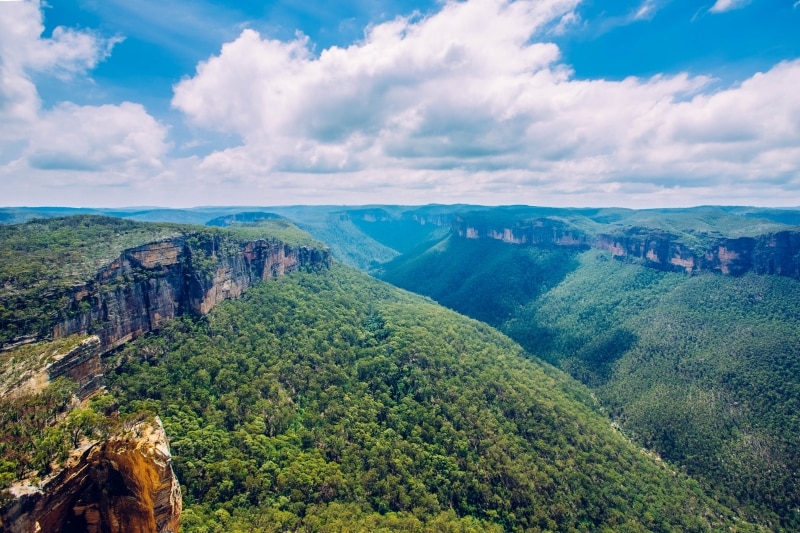
The World Heritage-listed Blue Mountains National Park, west of Sydney, is dotted with charming villages, dramatic waterfalls, plunging cliffs and rugged bushwalking tracks.

Day 4: Sydney to Alice Springs

3hrs 2,022km (1,256mi)

From Sydney, move on to the beating heart of the outback, the Northern Territory town of Alice Springs.

Day 5: Alice Springs to Uluru

5hrs 468km (291mi)

Make the drive (or fly) from Alice Springs to Uluru. The mammoth red monolith isn’t just an Australian icon, it’s also a deeply sacred place.

Day 6: Uluru to Kata Tjuta

0.5hrs 56km (35mi)

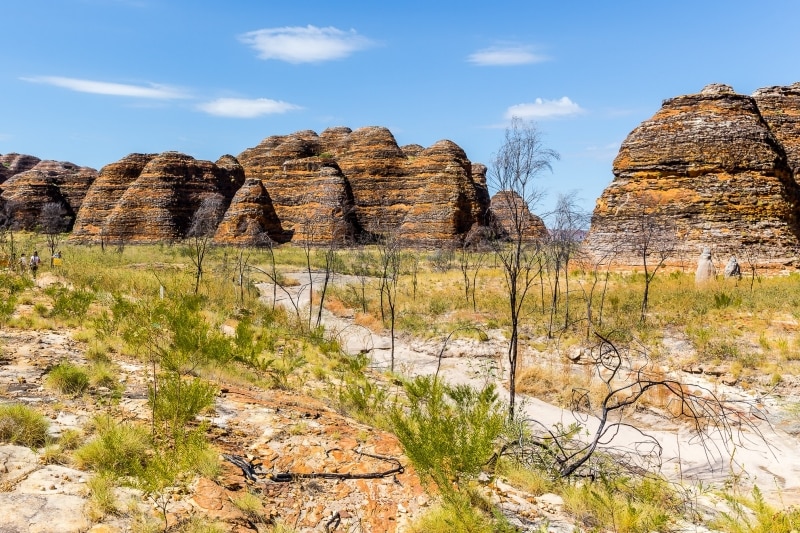
From Uluru, drive to Kata Tjuta, a natural wonder of ochre-coloured domes emerging from the desert.

Day 7: Uluru to Brisbane

3hrs 2,216km (1,376mi)

Fly to Brisbane, the capital of Queensland and a river city known for its thriving arts scene.

Day 8: Brisbane to Cairns

2.5hrs 1,700km (1,056mi)

Fly from Brisbane to Cairns, the gateway to the Great Barrier Reef and the Daintree Rainforest.

Day 9: Great Barrier Reef cruise from Cairns

Stretching 2,300km (1,430mi), the Great Barrier Reef is made up of thousands of coral reefs and hundreds of islands.

Day 10: Cairns to the Daintree Rainforest

2.5hrs 124km (77mi)

One of Australia’s most magnificent natural wonders, the Daintree Rainforest is an easy drive from Cairns.

Frequently Asked Questions

Yes, United States citizens need a valid visa to enter Australia. Most U.S. passport holders travelling for tourism or short-term business should apply for an Electronic Travel Authority (ETA) prior to departure. 

  • Electronic visa: The Electronic Travel Authority (subclass 601) is an electronic entry visa linked directly to your passport – so you don't need to carry a physical copy.
  • How to apply: Applications for the Electronic Travel Authority must be submitted through the Australian ETA app. You should apply for your ETA prior to your departure, as visas are not available upon arrival.
  • Validity: The ETA allows eligible passport holders to travel to Australia as a tourist, to visit family or friends, or as a business visitor. The visa allows for multiple entries, and you can stay for up to three months total.

Please note this page is intended to provide general information only and does not constitute legal advice. Tourism Australia is not the Australian government visa granting authority. For information on visas to enter Australia, visitors should seek the most up-to-date information from Australian Government Department of Home Affairs. Australian visa regulations (including visa application charges) change from time to time. The information provided here is valid at the time of publication, but visitors should check this information is still current by visiting the Australian Department of Home Affairs.


Yes, if you’re travelling to Australia from the United Kingdom, you’ll need to obtain a visa before you arrive. British citizens are typically eligible for an electronic visitor visa, such as the eVisitor visa or an Electronic Travel Authority (ETA)

  • eVisitor (Subclass 651): This visa is free, and allows British citizens to visit Australia as a tourist, to visit family and friends, or as a business visitor. The visa allows for stays of up to three months, and the application is completed online.
  • Electronic Travel Authority (Subclass 601): This visa allows British citizens to visit Australia as a tourist, to visit family and friends, or as a business visitor. There is a small fee, and applications must be submitted through the Australian ETA app. This visa allows for stays of up to three months.

Please note this page is intended to provide general information only and does not constitute legal advice. Tourism Australia is not the Australian government visa granting authority. For information on visas to enter Australia, visitors should seek the most up-to-date information from Australian Government Department of Home Affairs. Australian visa regulations (including visa application charges) change from time to time. The information provided here is valid at the time of publication, but visitors should check this information is still current by visiting the Australian Department of Home Affairs.

Yes, if you’re travelling to Australia from China, you’ll need to obtain a valid visa before you arrive. For most short-term visits, Chinese passport holders should apply for a Visitor visa (subclass 600).

  • Electronic visa: The Visitor visa is entirely electronic and digitally linked to your passport. You do not have to carry a physical copy.
  • How to apply: The Visitor visa application is completed online through the Department of Home Affairs website. You will be required to complete the application, upload documents and pay the visa fee.
  • Validity: The Visitor visa allows Chinese citizens to visit Australia as a tourist, to visit family or friends, or as a business visitor for three, six or twelve months depending on your approval.

Please note this page is intended to provide general information only and does not constitute legal advice. Tourism Australia is not the Australian government visa granting authority. For information on visas to enter Australia, visitors should seek the most up-to-date information from Australian Government Department of Home Affairs. Australian visa regulations (including visa application charges) change from time to time. The information provided here is valid at the time of publication, but visitors should check this information is still current by visiting the Australian Department of Home Affairs.

Yes, this itinerary is ideal for first-time visitors, bringing together some of Australia's most iconic destinations into one simple adventure.

  • Iconic destinations: This itinerary is designed around three major Australian highlights – the vibrant city life of Sydney, the culture and nature of Uluru and the marine wonders of the Great Barrier Reef.
  • Easy route: Both direct domestic flights and short drives are used to make the route between destinations easy and manageable.
  • Diverse urban and natural landscapes: This trip around Australia showcases the immense diversity of Australia's landscapes – from the skyline of Sydney and the red sands of the outback to the colourful corals of the Great Barrier Reef.

The most efficient way to travel between Sydney, Uluru and the Great Barrier Reef is by air. Driving is a great option to explore day trips and nearby destinations.

  • Sydney to Uluru: Direct flights are available from Sydney (SYD) to Uluru (AYQ). Alternatively, fly direct to Alice Springs (ASP) and enjoy the outback road trip to Uluru-Kata Tjuta National Park.
  • Uluru to the Great Barrier Reef: You can fly direct from Uluru (AYQ) to Cairns (CNS), the gateway to the Great Barrier Reef.
  • The Great Barrier Reef to Sydney: To get back to Sydney, take an easy direct flight from Cairns (CNS) to Sydney (SYD).
  • Driving options: There are beautiful destinations within driving distance from the icons. The Blue Mountains are just 90 minutes from Sydney, Kings Canyon is 3.5 hours from Uluru and the Daintree Rainforest is just 2.5 hours from Cairns.

Australia is a great year-round destination, and the best time to visit varies by region. For this itinerary specifically, shoulder seasons and winter tend to be more ideal than summer.

  • Spring and autumn: Spring (September to November) and autumn (March to May) offer pleasant temperatures in Sydney, Uluru and the Great Barrier Reef.
  • Winter: While winter (June to August) brings chillier weather to Sydney, it's an ideal time to visit Uluru and the Great Barrier Reef, as it's dry season in Australia's north.
  • Summer: Summer (December to February) falls in the wet season in Australia's north, which brings high temperatures and humidity to Uluru and the Great Barrier Reef. If you choose to travel during this time, it's advised to plan your activities to avoid the midday heat.

Getting around Australia is relatively easy, with well-maintained roads and easy access to hire cars. But there's a few things to know before you hit the road.

  • Drive on the left: In Australia, driving is on the left-hand side of the road, with the steering wheel on the right. This may take some adjustment if you typically drive on the right.
  • Driving distances: Australia is a big country with endless destinations to explore. Before you head off on a road trip, be sure you know the driving distances between stops, as they can be longer than they appear on a map.
  • Driver's licences: You will need a valid driver's licence to hire a car and drive in Australia. Depending on where you're from, you may need to carry either an English translation of your local licence or an International Driving Permit.
  • Guided tours: If you're not comfortable driving, there are a range of guided tours in most destinations that will take care of the driving for you.

There are plenty of ways for travellers with accessibility needs to enjoy the Blue Mountains, and many of the most famous sights are thoughtfully designed to be as inclusive as possible.

  • Echo Point Lookout: A perfect place to view the iconic Three Sisters rock formation, Echo Point Lookout offers paved, flat tracks and accessible parking.
  • Scenic World: At Scenic World, travellers using a wheelchair or mobility aid can ride the Southern Hemisphere's steepest cable car, enjoy wheelchair-accessible boardwalks and travel between clifftops on the Scenic Skyway.
  • Accessible walking tracks: There are also selected accessible walking tracks and lookout points throughout the region, where boardwalks and well-maintained paths lead to waterfalls and forested scenery.